
LAND EXPERIENCES / PAPUA NEW GUINEA / HIGHLIGHTS / ACCOMMODATIONS / EXTENSIONS
Land Experiences in Papua New Guinea
The most coveted destination among adventurers from around the world.
A territory where it is still possible to find lost tribes and where each town you visit is a different culture full of color.
In 1933, Mick and Dan Leahy decided to undertake an expedition to the unknown mountains of Papua New Guinea, thinking they would be uninhabited. They were surprised to discover that these places were populated by thousands of native people with different languages and customs, in tribes that remain isolated to this day.
Papua New Guinea, an independent Commonwealth country, is a unique tourist destination combining rich biodiversity, diverse culture, and stunning landscapes. Known for its traditional tribes, pristine beaches, and lush rainforests, this destination offers a truly adventurous travel experience.
Among its most isolated regions are the Highlands, with valleys at over 2.800 meters and mountains as high as 4.500 meters. The Tari Valley, home to the Huli Men, is prominent in this area. This warrior people had their first contact with Westerners in the 50s, and few have visited them since. The Huli are distinguished by their belligerence with neighboring clans, generosity with visitors, and vanity. Warriors paint their faces daily and adorn themselves with feathers and plants. Their traditions include a nearly year-long retreat for men, where they create a wig decorated with their own hair that stays with them for life.
The country's largest festival is known as the Mount Hagen Sing Sing Festival. Held in August, it brings together more than 50.000 native people from various tribes, offering a stunning spectacle of colors and traditions that will astound any lucky witness. Another fascinating region is the Sepik River basin, 1.126 km long in the north of the country. Unlike the mountains, the Sepik people have a simpler and more primitive appearance, but their crafts and rituals are extremely rich. You can take river cruises or venture out by canoe, sleeping in riverside villages.
A trip to Papua New Guinea can be completed by visiting its main cities and national parks, and extending to the Milne Bay area or the Bismarck Sea to explore reefs and island settlements.
The most outstanding
The accommodations
Extensions to your trip
Gallery


More Information about Papua New Guinea
When to travel?
The climate is tropical and highly varied, given the characteristics and size of the territory. The rainiest season is from December to March, except for the Milne Bay region; from May to October, the climate is drier throughout the territory, except in the southeast. In some areas of the central mountain range, the altitude is considerable, and low temperatures can be reached.
How much does it cost?
Visiting the interior of this unique destination sometimes involves the logistics of a traditional expedition, with porters, etc. This means the trip price will vary considerably depending on the number of participants, the region visited (which sometimes involves chartering small planes), and the desired level of comfort. A 12-day program, including Sing Sing at Mt. Hagen, a tour of the highlands, and an extension to Sepik, including a chartered flight for a group of 6, has a starting price of €9.700. International and domestic flights, as well as the option of extended travel insurance, are not included. More flight information is available.
What do I need to know?
The most traditional route, flying from Europe, is usually via Singapore, although it's also possible—albeit longer—to fly via Cairns or Brisbane (Australia). Any of these routes may involve a stopover in Indonesia. The following information refers to Papua New Guinea, but some information is common to other countries on the itinerary:
- Documentation: Visa processing is required in advance, requiring a passport valid for a minimum of six months from the date of arrival in PNG. You may be required to provide proof of travel for tourism and the intention to depart the country at the end of your stay. Depending on the circumstances, you may be asked to provide additional documentation to the ICA to support your application. In most circumstances, it is valid for a single-entry stay of sixty days from the date of arrival. Since the process is somewhat complicated and requires multiple travel documents, we recommend contact for management with our reservations department.
- Currency: the kina, which is divided into 100 toeas. There are only a few places where you can pay by credit card.
- Language: Of the 750 languages spoken in Papua New Guinea, English is the most widely spoken. For visits to the interior of the country, we have interpreter guides, depending on the region.
- Electricity: 220 volts. Australian three-prong plug, Australian Type I plugs.
- Health: Vaccinations against yellow fever and cholera are mandatory for travelers from countries where these diseases are present. Malaria prophylaxis is highly recommended at altitudes below 1.800 meters.
For any further information about this trip, we recommend contacting our reservations department, where a team of professionals will assist you personally. If you wish, we can also arrange a multimedia video conference session to help you plan the best possible experience visiting any destination in Australia, drawing on our personal experience in the area.

Other recommended options
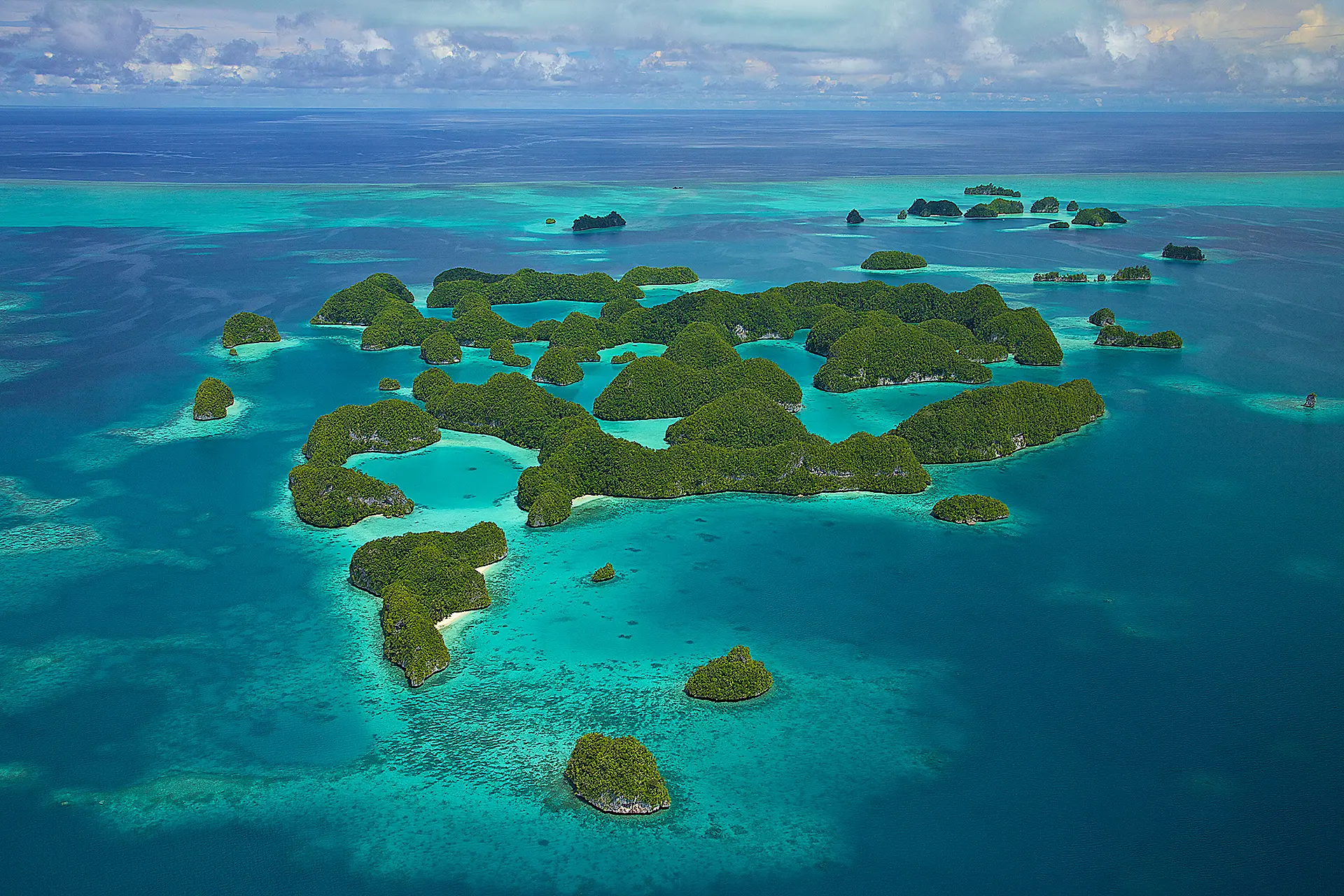
Cruise in Palau
22/APR- 03/MAY/2027. €5.800
Explorer Club trip to the wildest Pacific. 

Papua New Guinea
A territory where it is still possible to find lost tribes and a different culture.
Request information about our programs
